
Delegate stories
Ruchira Kulshreshtha
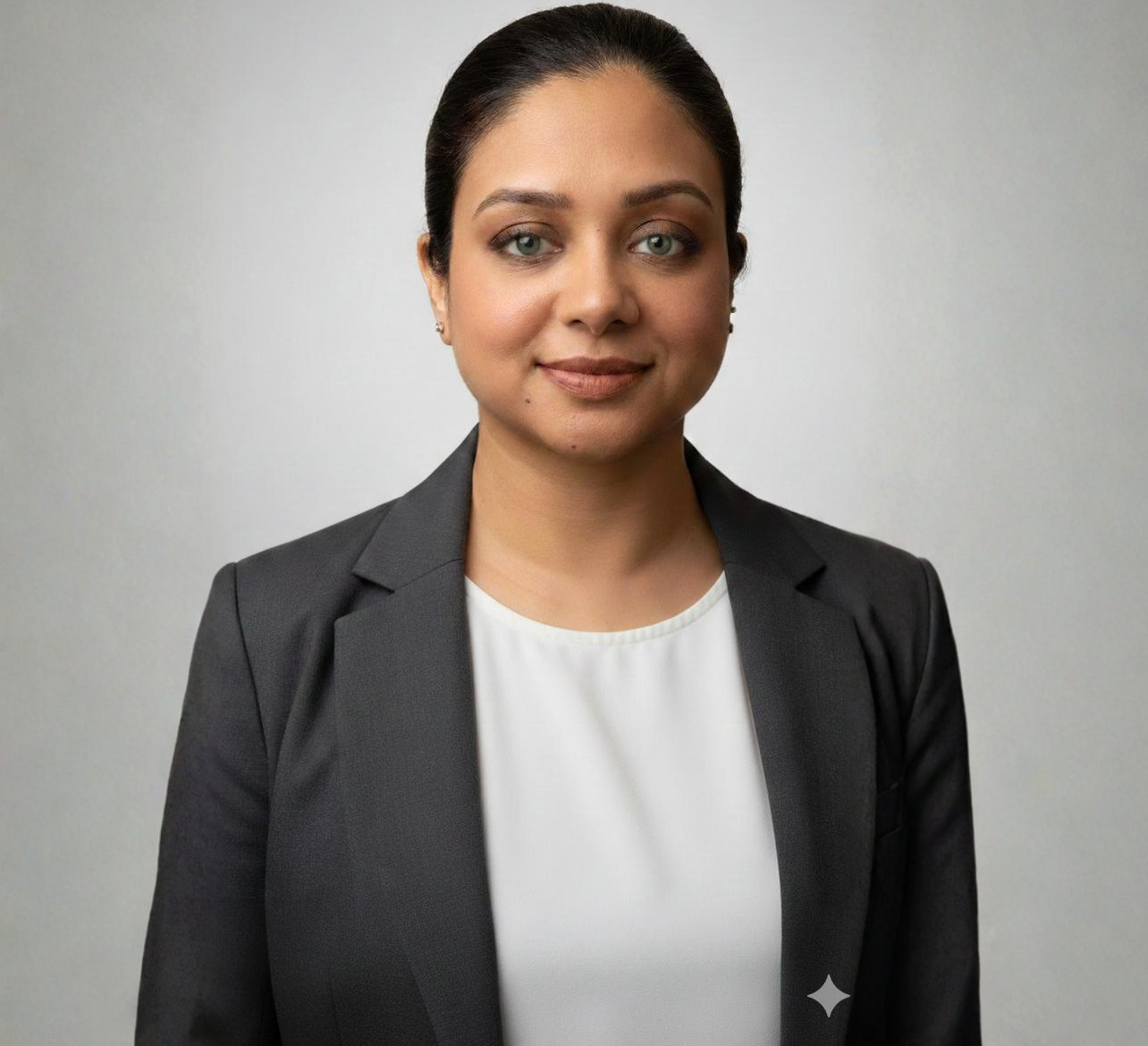
Ruchira Kulshreshtha

Diploma in Environmental, Social and Governance (ESG)
Delegate stories
Ruchira Kulshreshtha
"This Diploma in ESG offered the prestige and rigor required to transform my operational expertise into a credible, board-ready ESG leadership profile. It has refined my leadership by providing the high-level vocabulary necessary to engage with executive stakeholders."
Tell us about your professional experience before discovering The Corporate Governance Institute.
I work as a Global QHSE Manager, responsible for the strategic implementation of ISO standards, occupational health and environmental safety across diverse international jurisdictions. My expertise also includes Lean Six Sigma and Continuous Improvement focused on embedding sustainability into the DNA of operational processes, moving beyond mere compliance to drive systemic efficiency. Despite managing complex risk and safety portfolios, I identified a need to align these technical QHSE outcomes with executive-level stewardship. I joined the Institute to bridge the gap between operational excellence and formal ESG governance.
What challenges or opportunities were you facing in your career or on your board before taking our course?
My primary challenge was the ‘translation gap’ between technical QHSE metrics and boardroom strategy. While I could successfully drive operational efficiency and ISO compliance through Lean Six Sigma, these successes often remained siloed within middle management. I recognised a significant opportunity to elevate Continuous Improvement data into the broader ESG narrative, yet I lacked the formal governance vocabulary to influence fiduciary-level decisions. I faced the hurdle of moving from a specialist who manages risk to a leader who shapes institutional resilience, necessitating a deeper understanding of how sustainability integrates with corporate law and director duties.
Why did you choose to study for the Diploma in ESG with us to help with these challenges/opportunities?
I selected this ESG Diploma specifically for its focus on integrating sustainability with corporate governance, rather than treating ESG as a standalone reporting exercise. Given my background in Global QHSE and Lean Six Sigma, I already possessed the technical tools for operational efficiency; however, I chose this program to acquire the strategic framework necessary to communicate these results to a board. I needed a curriculum that moved beyond compliance. One that provided the language of fiduciary duty and long-term value creation. This Diploma in ESG offered the prestige and rigor required to transform my operational expertise into a credible, board-ready ESG leadership profile.
Can you describe any particular elements of the course that stood out to you or made a significant impact?
The most impactful element was the deep dive into Double Materiality. As a Lean practitioner, I valued the shift from viewing impacts solely through an operational lens to understanding how environmental and social risks financially affect the organisation’s long-term viability. Additionally, the modules on Boardroom Dynamics and Fiduciary Duty were transformative; they provided the ‘missing vocabulary’ to translate technical QHSE metrics into strategic board-level intelligence. Understanding the legal implications of greenwashing was also critical, as it underscored the necessity of the data integrity I have spent my career building through Continuous Improvement frameworks.
How has completing this course influenced your career, leadership approach, governance or ESG skills?
Completing this course has effectively transformed my perspective from operational oversight to strategic stewardship. While I previously viewed sustainability through the lens of QHSE compliance and process efficiency, I now approach it as a fundamental driver of corporate resilience and value creation.
The Diploma has refined my leadership by providing the high-level vocabulary necessary to engage with executive stakeholders. I no longer just report on safety or waste metrics; I frame these as material risks and opportunities within a formal governance structure. This shift has enabled me to integrate Lean Six Sigma methodologies directly into ESG reporting, ensuring that data integrity isn’t just a technical achievement but a pillar of board-level accountability. Ultimately, it has bridged the gap between my technical expertise and my ability to influence organisational culture and fiduciary strategy.
What did you find most beneficial about studying with The Corporate Governance Institute?
What stands out most about The Corporate Governance Institute is the caliber of global networking and the practicality of the boardroom perspective. For a professional with a technical QHSE and Lean Six Sigma background, the most beneficial aspect was the transition from being an expert in the room to becoming a leader at the table. The Diploma doesn’t just teach the theory of ESG; it teaches the mechanics of influence.
What advice would you give future learners wishing to pursue the Diploma?
My primary advice is to approach the curriculum not as a compliance checklist, but as a strategic language immersion. If you come from a technical background like QHSE or Lean, resist the urge to stay in the operational weeds. Instead, focus on how your data translates into financial materiality and fiduciary risk. Engage deeply with your global cohort; the diverse perspectives of fellow directors are as valuable as the course modules themselves. Finally, start mapping your existing processes to the governance frameworks early on. This ensures the Diploma becomes a practical toolkit for immediate executive influence.
